Free · Unbiased · No Signup Required
The Credit & Debt Ally
Free debt calculators that tell you the truth — including when consolidation isn't the right move. Payoff plans, avalanche vs snowball, balance transfer analysis, and an honest consolidation risk assessment.
💳 Credit card payoff + debt-free date
🃏 Avalanche vs snowball comparison
🔄 Balance transfer break-even
⚠️ Consolidation risk assessment
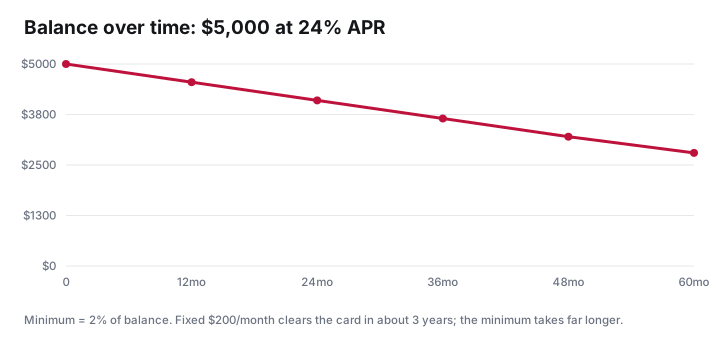
📉 Minimum payment trap visualizer
💳 Credit card payoff calculator
Enter your balance, APR, and monthly payment — or your target payoff date — to see exactly when you'll be debt free and how much interest you'll pay.
$
%
$
Debt payoff questions answered
🔗 Trusted debt resources
CFPB
Consumer Financial Protection Bureau — official credit card rights and resources
NFCC
National Foundation for Credit Counseling — free and low-cost debt counseling
r/personalfinance
Community advice on debt payoff strategies and credit card management
Annual Credit Report
Free official credit reports from all three bureaus — federally mandated, no catch
Salary Explained
Find your true hourly rate and compare job offers — more income accelerates debt payoff
Paycheck Breakdown
See exactly where your paycheck goes so you can find more money for debt payments
In-depth debt & credit guides
Avalanche vs snowball
Which payoff order clears your debt faster — the math behind saving interest versus staying motivated.
How balance transfers work
The mechanics of 0% cards, the transfer fee, the promo deadline, and how to run the break-even math.
Debt consolidation explained
When rolling debts into one loan genuinely helps — and the fees and terms that can make it cost more.
Credit utilization & your score
Why the share of your credit you use moves your score so much — and quick ways to lower it.
💳 Debt payoff tools & resources
Free tools and services to accelerate your debt payoff.
Credit Karma
Free credit score monitoring and debt tracking
SoFi personal loans
Low-rate personal loans for debt consolidation — check your rate in 2 min
Marcus by Goldman Sachs
No-fee personal loans for debt consolidation
LendingClub
Peer-to-peer personal loans — often lower rates than banks
The Insurance Ally
Free coverage calculators and plain-English guides for auto, home, and renters insurance